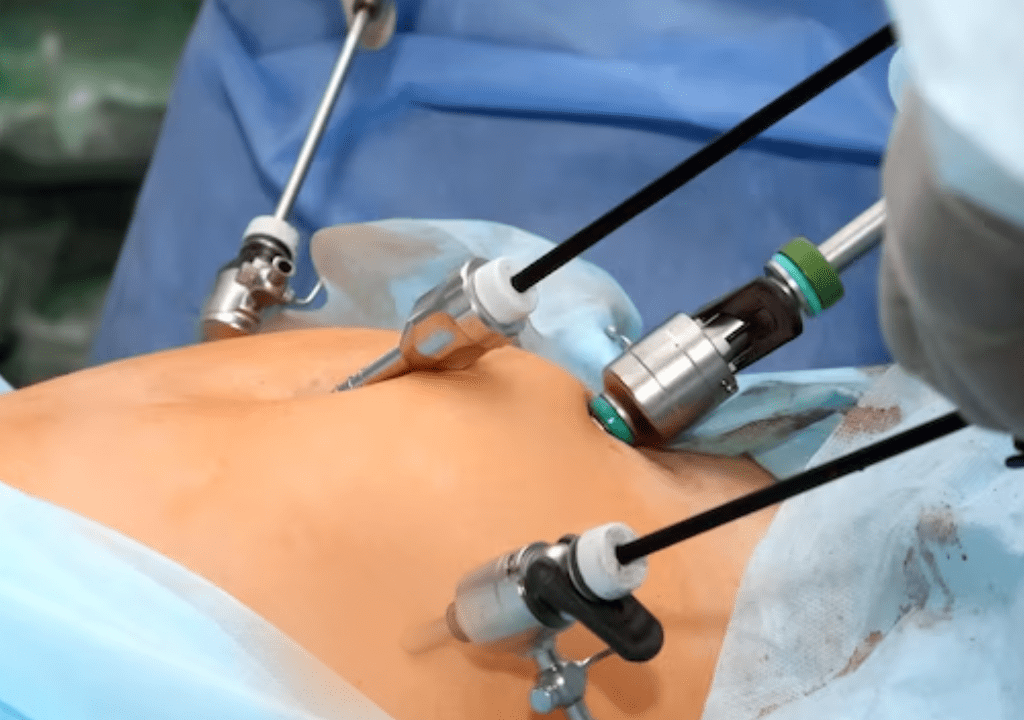
Minimal Access / Laparoscopic Surgery
Surgery has changed significantly over the years. Procedures that once required large incisions, longer hospital stays, and extended recovery periods can now often be performed through much smaller openings with the help of advanced instruments and imaging technology. This is where minimal access surgery, also known as laparoscopic surgery, has transformed patient care.
For many patients, one of the biggest concerns before surgery is recovery—how much pain there will be, how long they will need to stay in the hospital, and when they can return to normal life. Minimal access surgery addresses many of these concerns by allowing surgeons to perform precise procedures with less disruption to the body.
What Is Minimal Access Surgery?
Minimal access surgery uses small incisions instead of larger surgical openings.
A tiny camera, called a laparoscope, is inserted through one of these openings, allowing the surgeon to view the internal area clearly on a monitor while operating with specialized instruments.
Because the procedure is guided visually with precision, surrounding tissues are disturbed less compared to traditional open surgery.
Conditions Commonly Treated Through Laparoscopic Surgery
This technique is widely used for several surgical conditions, including:
- gallbladder disease
- appendix removal
- hernia repair
- certain intestinal procedures
- gynecological conditions
- some abdominal diagnostic procedures
In many cases, the same treatment that once required open surgery can now be completed laparoscopically depending on the patient’s condition.
Why Patients Often Benefit from Smaller Incisions
One of the biggest advantages of minimal access surgery is that the body usually experiences less trauma during the procedure.
This often means:
- reduced pain after surgery
- smaller scars
- lower risk of infection
- shorter hospital stay
- quicker return to daily activity
For many working individuals and elderly patients, faster recovery becomes an important advantage.
Better Visualization for Precision
The camera used during laparoscopic surgery often gives surgeons a magnified internal view.
This allows delicate structures to be seen more clearly, which supports careful surgical precision.
In some situations, this visual advantage can help improve procedural accuracy.
Recovery After Laparoscopic Procedures
Patients often notice that movement becomes easier sooner compared with traditional surgery.
Walking is usually encouraged early, depending on the procedure performed.
Recovery still depends on:
- the type of surgery
- general health condition
- age
- associated medical conditions
But overall recovery tends to be smoother in many cases.
Is Minimal Access Surgery Suitable for Everyone?
Not every patient or condition is automatically suited for laparoscopic surgery.
The decision depends on:
- previous surgeries
- complexity of disease
- emergency status
- internal anatomy
The surgical team decides the safest method after detailed evaluation.
A Modern Surgical Approach Focused on Comfort
Minimal access surgery reflects how modern medicine increasingly combines precision with patient comfort.
For many patients, it offers effective treatment with less physical strain and a more manageable recovery experience.