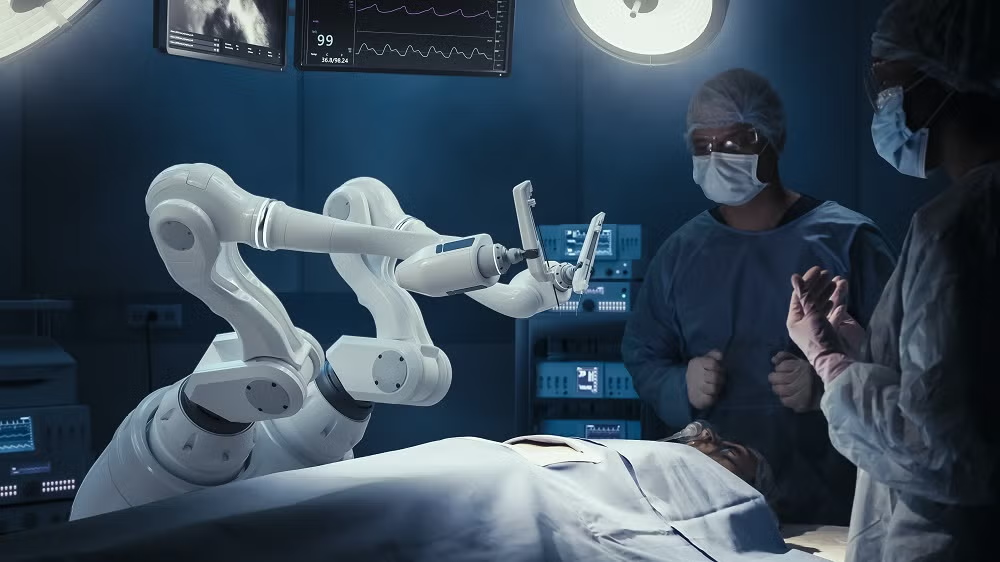
Robotic Heart Surgery
Now machines help fix hearts without big cuts. Instead of slicing wide across the chest, doctors make tiny holes. These tools move with extreme accuracy because a surgeon guides them carefully from nearby. Precision meets smaller openings thanks to robotics. The body faces less shock when entry points shrink. Hands control everything but metal arms do the work. Small paths replace long scars more often today.
From a seated station, doctors guide mechanical limbs during machine-assisted procedures. These tools copy hand motions exactly, making tiny adjustments possible. Precision improves when working deep inside the chest. Tiny spaces become reachable without large cuts. Movements stay steady where human hands might shake. Traditional approaches require more opening up. This method reduces how much tissue gets disturbed. Control feels smoother through digital linkage. The body responds better to smaller interventions. Each motion transfers directly, just scaled down. Access to inner regions improves noticeably. Less force is needed overall. Human touch combines with engineered accuracy. Fine work happens remotely. Distance does not weaken performance. Instruments respond instantly. Surgeons adapt quickly to feedback. Results often show less strain on patients. Recovery time shortens as a result. Internal navigation becomes easier. Delicate tasks feel more manageable. Motion filtering helps avoid slips. Wrist-like bending adds flexibility. Joints move like real ones. Range expands beyond natural limits. Operations once impossible now happen routinely. Technology extends capability quietly. No dramatic changes appear at first glance. Subtle shifts redefine what is achievable. Long-term benefits emerge slowly.
Tiny movements become clear through sharp three-dimensional visuals during robotic heart procedures. Because of this, doctors see fine details much more easily. As a result, handling small tissues inside the heart turns out smoother. When vision improves, fixing a mitral valve gains accuracy. In similar fashion, rerouting blood vessels benefits from clearer sight. Even patching holes between chambers works better when depth and detail stand out. Structures once hard to distinguish now show their shape fully. With space and form easier to judge, delicate tasks feel less uncertain. Each motion responds more directly to what the specialist sees. Clarity reshapes how subtle corrections take place. Precision grows not by force but by sight. The body’s intricate layout reveals itself step by step. Repair becomes guided by what appears plainly before the eyes. Little elements matter more when they are finally visible. Seeing deeply changes how hands move in response. What looked complex moments ago now fits into focus. Details that blur in regular settings snap into place here. A steady stream of visual information supports each decision. Movement follows image without delay. Depth perception shifts the way tools interact with tissue. Fine adjustments happen because the eye leads clearly
Smaller cuts mean less pain after robotic heart procedures. That often leads to reduced bleeding during recovery. Infection chances drop quite a bit too. Hospital time? Usually much briefer than with standard open surgery
Faster healing often follows robotic heart procedures, so daily routines return more quickly, plus comfort during recuperation tends to be better
Usually, folks get this kind of fix when dealing with mitral valve issues, some types of bypass work, or physical flaws in the heart setup – also shows up in complex heart operations now and then. Less ache afterward tends to happen, along with lower chance of heavy bleeding, quicker exit from the hospital, tiny cuts instead of big ones, plus getting back to daily life sooner than before. What makes it click? Machines that move like hands, guided by sharp human minds, teaming up so results stay strong over time while keeping risks low.